In-depth review
Vanotium Cutting Board: The Complete Guide for a Cleaner, Calmer Kitchen
Reading time: about 10 minutes
Most people never think about their cutting board until something goes wrong. A wooden board splits down the middle after one too many trips through a hot sink. A plastic board turns cloudy, scarred and faintly orange after a summer of tomato sauce. Garlic smell lingers for days. Then comes the uncomfortable question: what exactly is living in all those tiny knife grooves? The Vanotium Cutting Board was designed as an answer to that question. It replaces porous wood and soft plastic with a smooth, brushed-metal surface that wipes clean, does not soak up liquids and looks right at home on a modern countertop.
In this guide we look at the board from every angle: how it is built, why a non-porous surface matters for hygiene, how it performs with meat, vegetables, bread and dough, the honest trade-offs you should know about, and who will get the most value from it. By the end you should know whether the Vanotium Cutting Board belongs in your kitchen.
What Is the Vanotium Cutting Board?
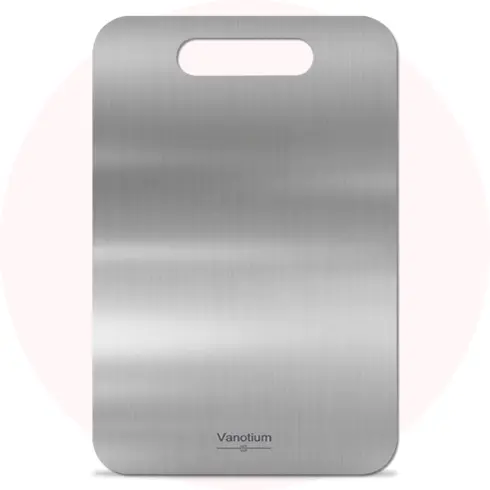
The Vanotium Cutting Board is a single sheet of brushed metal shaped into a rounded rectangle, with a generous cut-out handle at one end and a discreet Vanotium mark etched near the edge. There are no glued layers, no plastic inserts and no coating to peel away. It is deliberately simple: a flat, rigid, food-prep surface that can move from the counter to the stove to the sink without fuss.
That simplicity is the point. Traditional boards need oiling, careful drying and eventual replacement. Plastic boards are cheap, but they wear quickly and are hard to truly clean once they are deeply scratched. A metal board flips the maintenance equation: you rinse it, dry it and put it away. There is nothing to season and nothing that warps when it gets wet.
Why Home Cooks Are Rethinking Wood and Plastic
Wood has a long tradition, and a well-kept end-grain block is a beautiful thing. But wood is organic and porous. It drinks in moisture, which is why it needs regular oiling and why it can crack when it dries unevenly. It can also absorb strong odours from onions, fish and garlic, and many people simply do not have the time to look after it properly.
Plastic solved the weight and cost problem but created a new one. Every cut leaves a groove, and over months those grooves become a rough, fuzzy landscape that is hard to scrub. Many cooks notice that their plastic boards stain permanently and start to hold smells no matter how often they go through the dishwasher. There is also growing interest in reducing how much plastic comes into contact with food.
A metal board like the Vanotium sidesteps both problems. The surface is non-porous, so liquids, oils and colours stay on top where you can rinse them away. It will not swell, split or warp, and it will not shed fibres or fragments into your food. For a lot of kitchens, that is a meaningful upgrade.
Design and Build: A Closer Look
Pick up the Vanotium board and the first thing you notice is how slim it is. Unlike a chunky wooden block, it takes up almost no space in a drawer or cupboard, and it slides neatly beside your baking trays. The brushed finish gives it a soft satin look rather than a mirror shine, which helps hide everyday fingerprints and light marks.
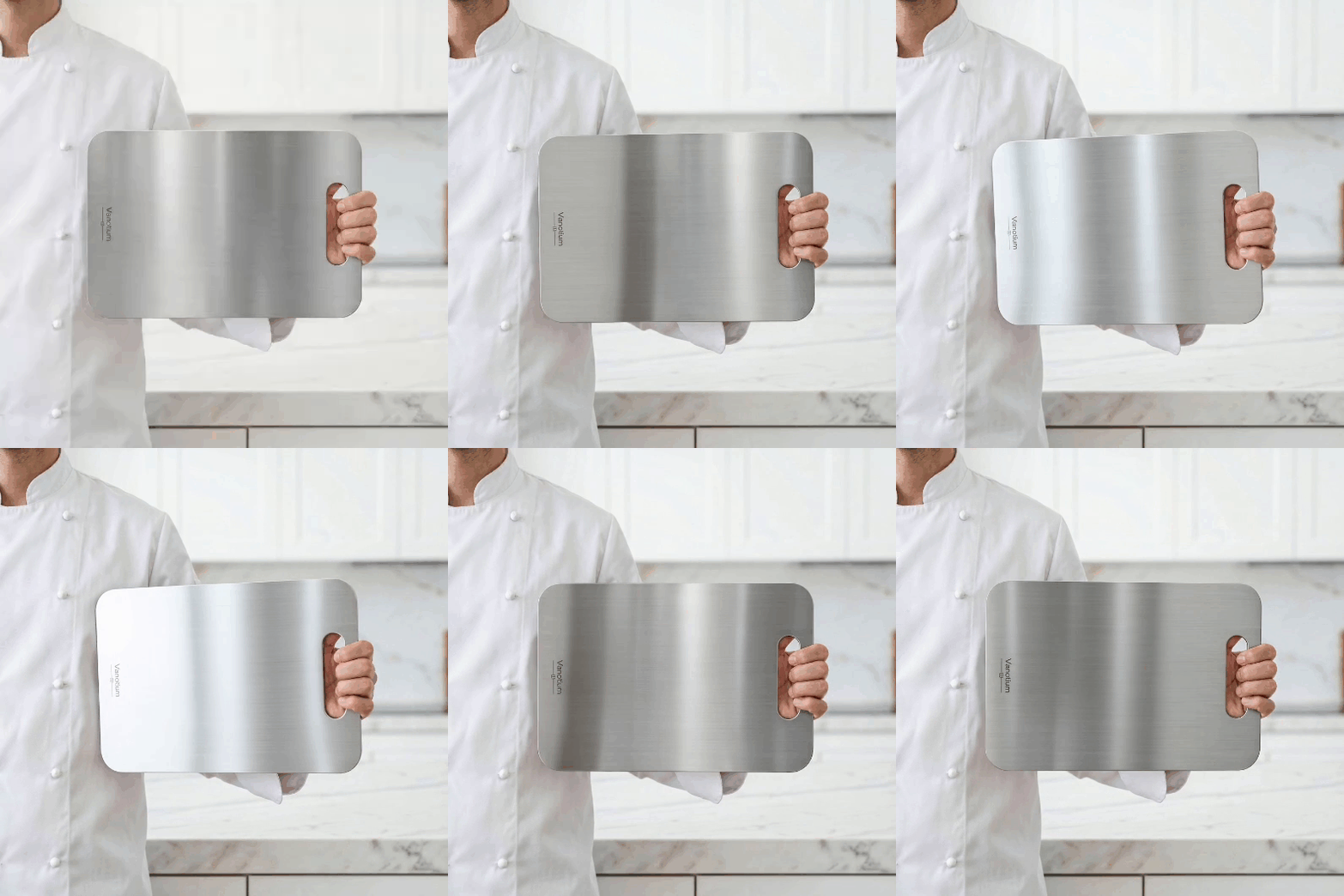
The rounded corners are a small but thoughtful detail. They feel comfortable in the hand, they do not catch on dish towels, and they make the board look more like a finished kitchen tool than a raw sheet of metal. The integrated handle is large enough for a full grip, so you can carry chopped vegetables straight to the pan, or hang the board on a hook when you are done.
Key design features at a glance
- One-piece metal construction with no glue lines, seams or coatings.
- Brushed satin finish that looks clean and modern on any countertop.
- Cut-out carry handle for easy transfer, pouring and hanging storage.
- Slim profile that saves cupboard and drawer space.
- Rounded, smooth edges for safer, more comfortable handling.
Like the clean, modern look? See the Vanotium board on the official page.
Check Today's PriceHygiene: Why a Non-Porous Surface Matters
Food safety starts with surfaces. When you slice raw chicken or beef, juices spread across the board. On a porous or deeply scratched surface, some of that moisture can settle into tiny gaps where a quick rinse may not reach. That is one of the reasons food-safety advice often recommends separate boards for raw meat and ready-to-eat foods, and thorough cleaning between tasks.
The Vanotium Cutting Board makes that cleaning step easier. Because the metal does not absorb liquid, there is no hidden reservoir for juices to collect in. Hot, soapy water reaches the entire surface, and you can see at a glance when the board is truly clean. It does not replace good kitchen habits — you should still wash it properly after handling raw meat — but it gives those habits a much better surface to work on.
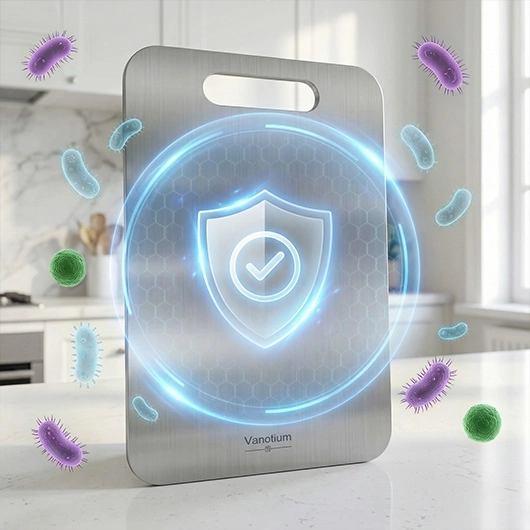
Odours are another quiet win. Fish, garlic and onions are notorious for leaving their mark on wood and plastic. On metal, those smells rinse away with the residue that causes them, so the cucumber you slice for a salad will not taste faintly of last night's curry paste.
Cleaning in Seconds
This is where the Vanotium board really earns its place. Tomato sauce, beetroot juice, turmeric and berry stains that would permanently tint a plastic board simply slide off. Hold it under the tap, give it a wipe with a soft sponge and a drop of dish soap, and it is ready for the next job. The handle makes it easy to tilt the board under running water without getting your sleeves wet.
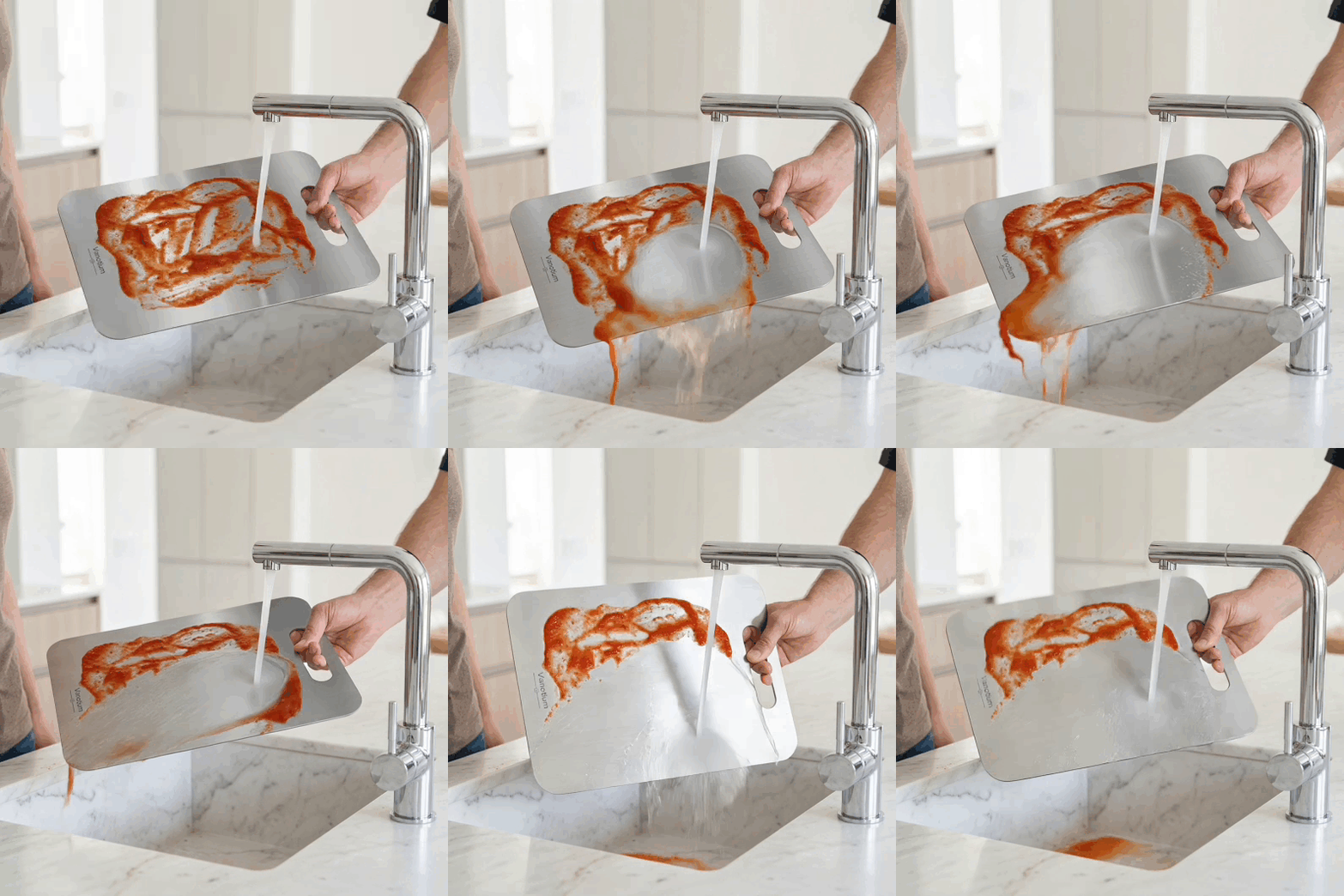
After washing, dry it with a towel or stand it upright on a rack. Because it will not warp, you do not need to worry about leaving it damp for a few minutes, although drying it promptly keeps the brushed finish looking its best. For busy weeknights, that speed adds up: less time scrubbing, more time eating.
Everyday Uses: From Steak to Sourdough
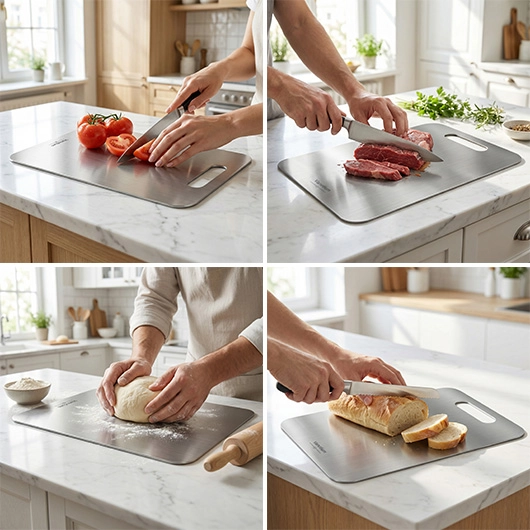
A great board should be versatile, and the Vanotium handles a wider range of tasks than you might expect. Its flat, rigid surface stays put on the counter, which is exactly what you want when you are working with a sharp knife or a rolling pin.
- Fruit and vegetables: dice tomatoes, peppers and onions without colour or smell soaking in.
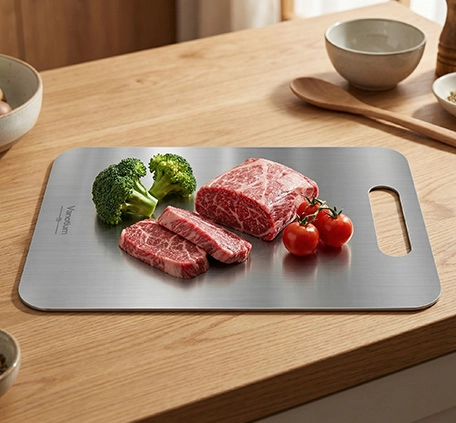
- Raw meat and fish: trim steaks, portion chicken or fillet fish, then wash the board thoroughly with hot soapy water.
- Baking and dough: the cool metal surface is pleasant for kneading bread dough and rolling out pastry.
- Bread and cheese: slice a crusty loaf and keep crumbs contained, then serve straight from the board.
- Defrosting and resting: metal conducts heat well, so many cooks like using it as a surface for thawing frozen foods or resting cooked meat.
Handling and Storage
The cut-out handle is more useful than it first appears. You can lift a whole pile of chopped vegetables and slide them into a hot pan in one motion, or carry sliced fruit to the table without a second dish. When you are done, hang the board from a hook or rail, or slip it into the gap next to your oven trays. It takes up a fraction of the space of a traditional wooden board.
Knife Care: The Honest Trade-Off
No board is perfect for every situation, and it is worth being upfront here. Metal is harder than wood or plastic, so chopping hard and fast directly on a metal surface can dull a fine knife edge sooner than a soft wooden board would. Serious cooks who use expensive Japanese blades for heavy chopping may prefer to keep a dedicated wooden board for that work.
For most home cooking, a few simple habits make a big difference. Use slicing and gentle rocking motions rather than heavy downward chops, keep your knives regularly honed, and let the board shine at what it does best: hygienic prep of meat, fish, colourful produce, baking and serving. Many households end up using the Vanotium as their go-to everyday board and save a wooden block for occasional heavy-duty work.
Vanotium vs. Wood vs. Plastic
It helps to see the three materials side by side. Wood is gentle on knife edges and beautiful to look at, but it needs oiling, careful drying and protection from soaking, and it can absorb odours over time. Plastic is light and inexpensive, yet it scratches quickly, stains easily and usually needs replacing within a year or two of regular use.
The Vanotium Cutting Board sits in a different category. It needs no seasoning, it will not crack or warp, it resists staining and smells, and it can last for years with nothing more than soap and water. The trade-off is that it is firmer under the knife, as covered above. For households that prioritise hygiene, durability and quick clean-up, that balance tends to favour metal.
What It Is Like Day to Day
Living with the board is refreshingly uneventful, which is exactly what you want from a kitchen tool. In the morning it handles sliced fruit for breakfast. At lunch it holds a sandwich loaf and some cheese. In the evening it takes on raw chicken, gets a hot soapy wash and is ready again for herbs and garnishes within a minute. There is no stained corner you avoid, no lingering smell and no ritual of oiling at the weekend. Over weeks, that small reduction in effort is what most owners appreciate most: one less thing in the kitchen that needs looking after.
Who Should Buy the Vanotium Cutting Board?
The Vanotium board is a strong fit if you value cleanliness, speed and low maintenance. It suits busy families who cook every day, meal-preppers who handle a lot of raw protein, small-apartment kitchens where space is tight, and anyone tired of replacing stained plastic boards every year. It also makes a thoughtful gift for new homeowners or someone setting up their first kitchen.
It may not be the right choice if you rely heavily on aggressive chopping with premium knives, or if you love the warm look and feel of a traditional wooden block above all else.
Ready for a board that rinses clean in seconds?
Check Today's PriceTips to Get the Most From Your Board
- Wash with warm water and mild dish soap after each use, especially after raw meat or fish.
- Use a soft sponge rather than steel wool to keep the brushed finish looking even.
- Dry it with a towel or stand it upright so water does not leave spots.
- Place a damp cloth underneath if you want extra grip on very smooth countertops.
- Hone your knives regularly and favour slicing motions over heavy chopping.
- Keep raw and ready-to-eat foods separate during prep, and wash between tasks.
Final Verdict
The Vanotium Cutting Board does not try to be everything. Instead, it focuses on the problems most home cooks actually face: boards that stain, smell, warp and take too long to clean. Its non-porous metal surface, slim one-piece build and practical handle make everyday prep cleaner and simpler, and it looks smart enough to leave out on the counter.
If you are ready to retire a tired plastic board or simply want a more hygienic, low-maintenance surface, the Vanotium is well worth a look. Prices, bundles and stock levels can change, so the best place to check the latest offer is the official Vanotium Cutting Board page.